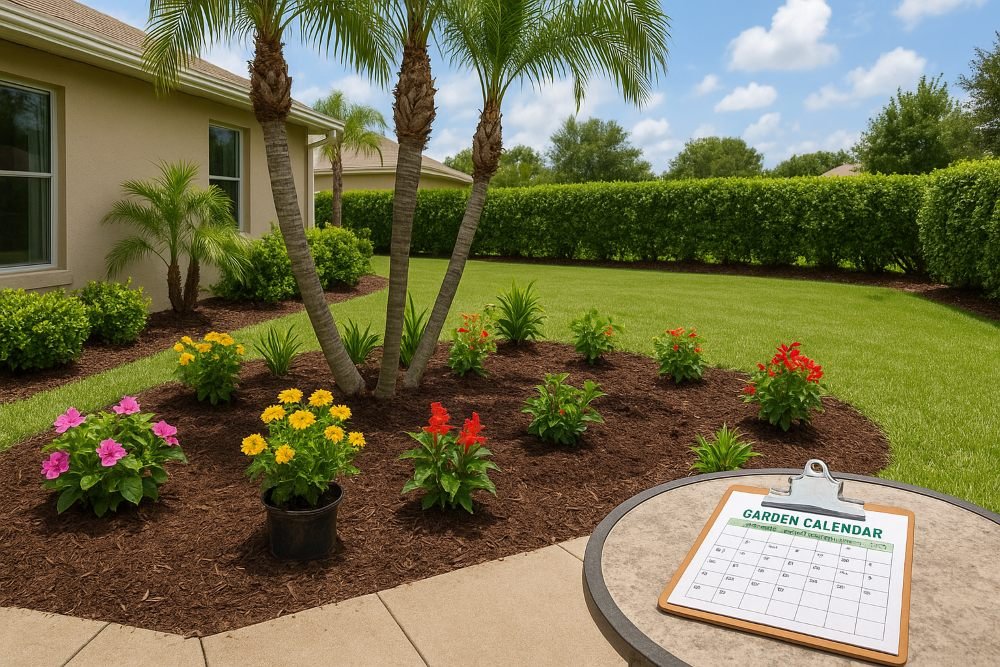

Living in Florida means trading snow shovels for sun hats—but that doesn’t mean your yard is completely hands-off. Florida’s unique climate calls for a seasonal approach to landscaping that’s light on labor and big on results.
Whether you’re maintaining an established landscape or nurturing a new one, this month-by-month guide helps you stay on top of yard care while still enjoying the retirement lifestyle you came for.
Spring (March–May): Wake-Up Call
Spring brings fresh growth and warmer temps—time to prep your yard for the months ahead.
To-do list:
- Refresh mulch around trees and beds
- Prune frost-damaged branches
- Fertilize lawns (after mid-March)
- Plant heat-tolerant annuals and perennials
Summer (June–August): Smart Maintenance
The heat is on, and your focus should be on keeping things healthy—not overworking.
To-do list:
- Water early in the morning, deeply but infrequently
- Mow less frequently, leaving grass slightly taller
- Keep an eye out for pests like chinch bugs or fungal issues
- Trim fast-growing hedges and trees lightly
Fall (September–November): Reset and Replant
Fall in Florida is ideal for planting, and your landscape will thank you.
To-do list:
- Plant new shrubs and trees (cooler soil, less shock)
- Aerate and fertilize lawns
- Replace tired summer annuals
- Cut back overgrown plants for shape
Winter (December–February): Rest and Restore
Florida’s mild winters mean your yard won’t go dormant, but growth slows.
To-do list:
- Rake leaves and remove debris
- Protect sensitive plants on chilly nights
- Add compost or organic matter to beds
- Plan for spring updates or landscaping projects